
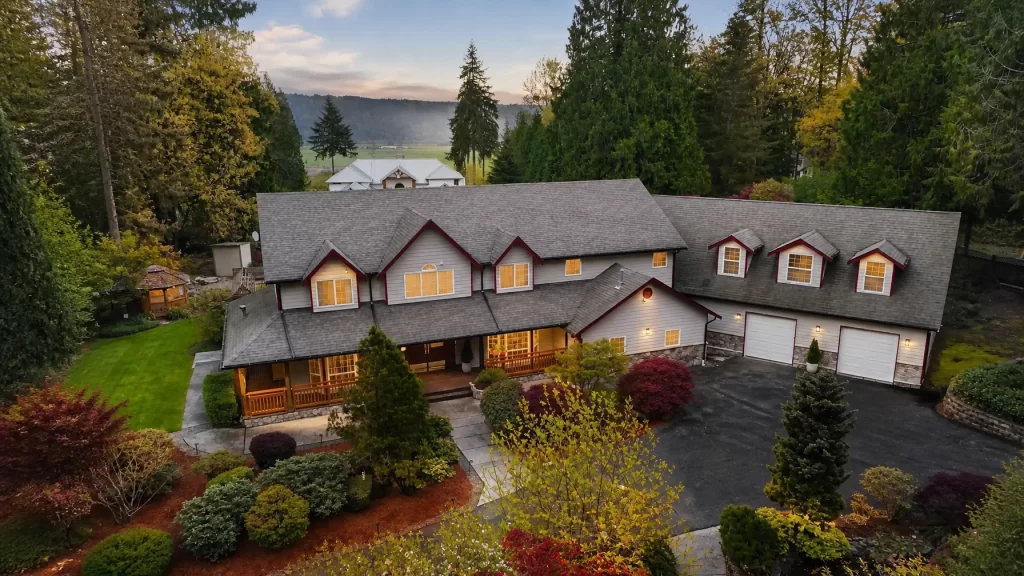
If you have been watching Seattle homes for sale this year, you may have noticed a meaningful shift. Buyers are not facing quite the same frenzy as they did in recent years, while sellers are having to compete more carefully for attention.
That makes late August and early fall an interesting time to plan your next move. You may have more choices, more time to think, and more room to negotiate: but the best homes can still move quickly.
Here is what the latest market data means, along with a practical look at Bellevue, Redmond, Bothell, Lynnwood, Kent, and Auburn.
Seattle’s fall 2026 market: More balanced, not stalled
Seattle resale inventory stood at approximately 3.9 months of supply on August 1, according to The Madrona Group’s August 2026 market report, which draws on NWMLS data.
That is:
- 22% more homes for sale year over year
- Approximately 9.2% fewer pending sales year over year
- An average July sales price of about $1.04 million
- Average price up roughly 1% year over year
- Price per square foot near $560, down about 1.4%
- Around 20 days on market for single-family homes, although the citywide average is longer
In practical terms, buyers have more options and negotiating room. Sellers can still do very well, but pricing and presentation matter more than simply putting a home on the market and waiting for multiple offers.
This is a more balanced market: not a market crash. Well-priced, move-in-ready homes in desirable locations can still attract strong interest and, in some cases, multiple offers.
The biggest opportunity is being selective without assuming every seller will negotiate. The home, neighborhood, condition, and price range still make a major difference.

Where buyers have the most leverage
The citywide numbers become even more useful when you look at property type:
- Single-family homes: About 3.4 months of inventory
- Condos: About 6.5 months
- New construction: About 5.8 months
Condos and new construction currently give buyers the most leverage. That may mean more time to compare properties, negotiate repairs, or ask about seller-paid closing costs and rate buydowns.
For condos, be especially thorough. Review homeowners association dues, reserve studies, insurance coverage, pending assessments, rental rules, and whether the building qualifies for your loan program.
New construction can also offer more flexibility than resale homes. Builders may be willing to contribute toward closing costs, offer upgrades, or help buy down your interest rate. Compare the full package: not just the advertised price.
Single-family homes remain more competitive, especially when they have a practical layout, usable yard, good condition, and a convenient commute.
Fall buying has a different advantage
Spring usually brings the most selection. Fall can bring better strategy.
By September and October, some sellers are highly motivated to complete a move before the holidays. Buyers may encounter:
- Fewer competing buyers at showings
- More time for inspections and document review
- Greater opportunity to negotiate repairs
- Seller credits toward closing costs
- Temporary or permanent mortgage rate buydowns
- Less pressure to waive important protections
The trade-off is that there may be fewer homes to choose from than in spring. That is why preparation matters. Before searching for “homes for sale near me,” decide which features truly matter:
- Maximum monthly payment
- Commute corridor
- School boundaries or programs
- Garage or off-street parking
- Yard size
- Home age and maintenance needs
- Access to parks, trails, or water
A clear wish list helps you move decisively when the right home appears.
Local guide: Which Seattle-area community fits your lifestyle?
Bellevue: Amenities, strong schools, and Eastside access
For buyers who work in Bellevue or nearby technology centers, Bellevue offers one of the region’s most convenient combinations of employment access, restaurants, shopping, parks, and highly regarded schools.
Searches for homes for sale Bellevue often come with a higher price point, but the 2026 market is giving buyers more room to evaluate value: particularly in higher-priced segments. A home that needs significant work may offer negotiating room, while a renovated home in a desirable location may still be highly competitive.
Lifestyle considerations include Lake Washington access, Meydenbauer Bay, neighborhood parks, and trails such as the Lake to Lake Trail. If your daily routine includes Eastside commuting and outdoor amenities, Bellevue may justify the premium.
Redmond: A strong fit for tech commuters and trail lovers
Redmond is a natural choice for people working near Microsoft, downtown Redmond, Bellevue, or other Eastside employment hubs. Light rail expansion is also an important long-term transportation consideration.
When comparing homes for sale Redmond, look beyond the interior finishes. Think about commute time, access to transit, sidewalk networks, and how close you are to Marymoor Park, the Sammamish River Trail, and Lake Sammamish.
Redmond can work particularly well for buyers who want a suburban setting without giving up bike routes, parks, restaurants, and access to major job centers.
Bothell: A flexible location for two-direction commutes
Bothell is often appealing to households split between Seattle and the Eastside. With access to I-405, SR-522, and I-5, it can provide more commuting flexibility than communities farther north or south.
The trade-off is that rush-hour traffic can still be challenging, so test-drive your likely commute at realistic times before making an offer.
For those researching homes for sale Bothell, lifestyle strengths include the Sammamish River area, nearby trail connections, parks, and generally good access to outdoor recreation. Bothell can also offer a useful middle ground between Eastside pricing and the larger lots sometimes available farther from the core.
Lynnwood: North Sound access with improving transit
Lynnwood can be a practical option for buyers who want more space than they may find in Seattle or Bellevue while staying within reach of the city. The Link light rail extension is an important factor for commuters headed toward Seattle or the University of Washington.
When considering homes for sale Lynnwood, compare neighborhoods carefully. Housing ranges from older single-family homes to newer townhome communities, and the feel can change significantly from one area to the next.
Lynnwood is also close to Edmonds, Puget Sound beaches, the ferry terminal, and waterfront parks. If water access matters but a waterfront address does not fit the budget, this area may deserve a closer look.

Kent and Auburn: More space for the money
For buyers prioritizing a larger yard, additional bedrooms, or a lower purchase price, South King County deserves attention.
Homes for sale Kent and homes for sale Auburn may offer more space than comparable properties closer to Seattle or the Eastside. The trade-off is usually a longer and less predictable commute, depending on whether you travel to Seattle, Bellevue, Tacoma, or another employment center.
Kent offers access to the Green River, Lake Meridian, and valley parks. Auburn provides an outdoors-oriented setting near the White River, Green River, regional trails, and routes toward Mount Rainier and the Cascade foothills.
Schools vary by neighborhood in both communities, so investigate the exact assignment rather than relying on citywide assumptions. Your agent can help you identify homes that fit your school, commute, and budget priorities.
Mortgage guidance for fall: Compare the whole payment strategy
Thirty-year fixed mortgage rates are hovering in the 6.6% to 6.8% range. Mortgage News Daily reported a national average near 6.77% on August 21, while John L. Scott used a rate around 6.82% in its August update. The Federal Reserve held its target federal funds rate at 3.50% to 3.75% on July 29, 2026.
Mortgage rates do not move in lockstep with the Fed’s target rate, and no one can reliably predict exactly where rates will be six months from now. Build your plan around what works today: not on the assumption that a refinance will definitely be available later.
Before touring seriously, get a current pre-approval. A strong pre-approval helps you understand your real buying range and makes your offer more credible.
Then ask your lender to compare three scenarios using the same purchase price and down payment:
- A lower sales price
- A seller credit toward closing costs
- A temporary rate buydown or discount points
The best choice depends on how long you expect to own the home, how much cash you want to keep available, and whether the seller is willing to contribute. A credit that reduces your upfront costs may be more useful than a small price reduction. Points may make sense for a long-term homeowner, but not always for someone planning a shorter stay.

A simple fall game plan
If you are buying:
- Get pre-approved before your search becomes serious.
- Compare neighborhoods by commute, schools, parks, trails, and water access.
- Look closely at condos and new construction, where leverage may be stronger.
- Ask your lender to model credits, points, and buydowns.
- Keep inspection and document review time in your strategy.
- Buy a home that fits your life and budget now, rather than relying on a future refinance.
If you are selling:
- Price against the homes buyers can choose today.
- Make repairs and presentation decisions before listing.
- Watch feedback during the first two weeks.
- Consider whether a closing-cost credit or rate buydown could attract more qualified buyers.
- Request a current my home value review based on comparable properties, condition, lot, and location: not just an automated estimate.
The fall 2026 Seattle market rewards preparation and local knowledge. Buyers have more breathing room, but the best opportunities still require good judgment. Sellers can still achieve strong results, but they need to meet the market where it is.
If you are thinking about buying, selling, or both, contact Why Not Own or email Tom@WhyNotOwn.com. Our team has spent 35+ years living and working in greater Seattle and more than 20 years helping clients make confident real estate decisions. With mortgage financing and residential brokerage under one roof, we can help connect the financing, neighborhood search, and negotiation strategy in one place.
Market statistics and mortgage rates change frequently. This article is for general educational purposes and is not an appraisal, loan commitment, financial plan, or guarantee of future market performance.